Craftsmanship & Restoration 5 min read
Before the Paint: Getting Classic Body Panels to Fit
A convincing restoration begins beneath the finish. Panel alignment, trial assembly and careful records help establish the bodywork before colour makes every reflection visible.
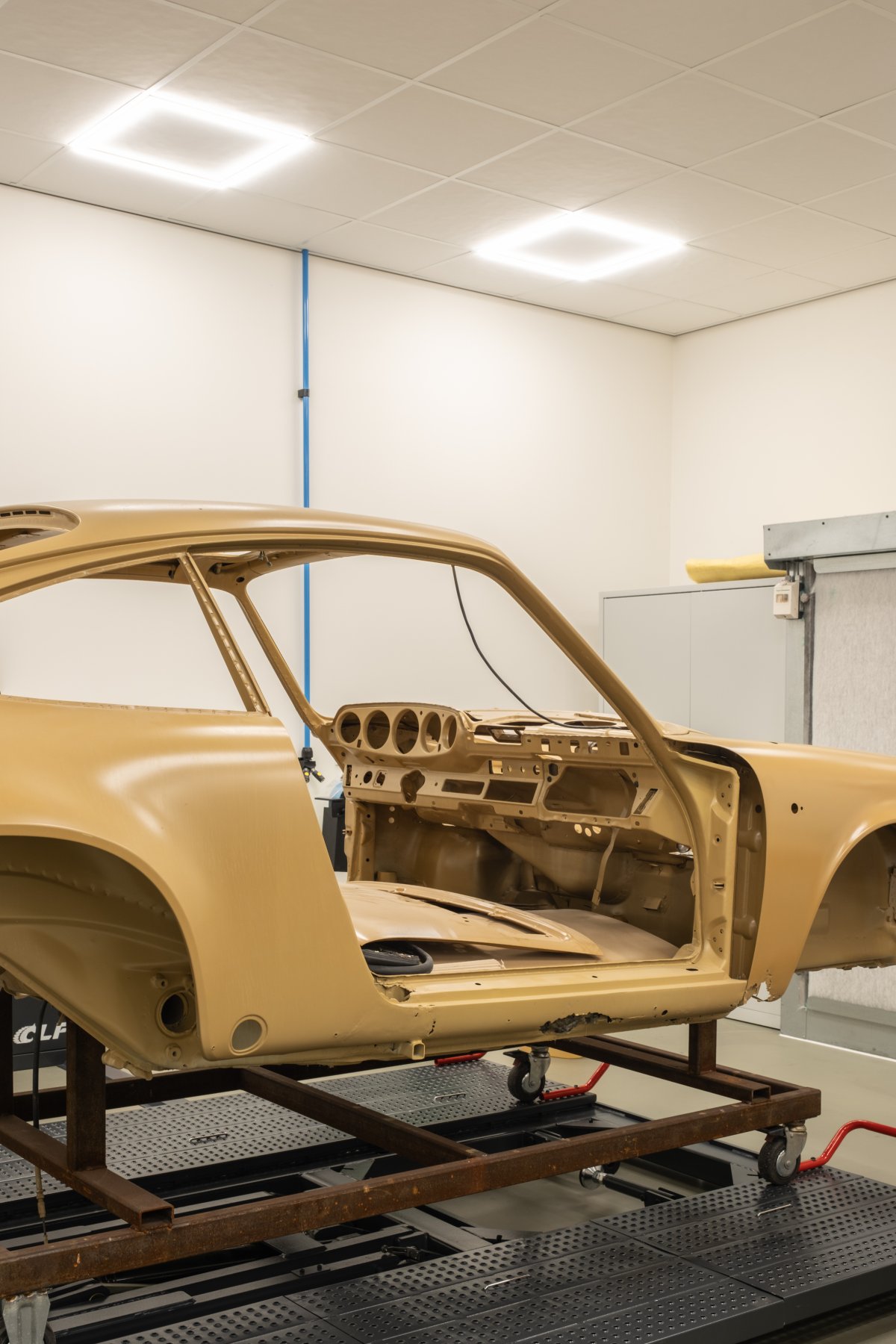
A fresh coat of paint can draw the eye straight past the work that matters most. Look along the flank of a classic car, however, and its quieter qualities emerge: the continuity of a crease, the relationship between a door and its surrounding panels, and the way a bonnet settles into the body. These details give a restoration visual coherence.
Getting them right is not simply a matter of making every gap identical. Older bodies have their own construction methods, tolerances and repair histories. The task is to understand those relationships before committing to the finish. This article explores general restoration principles, rather than prescribing a repair method or describing a documented Revolt Classics workshop procedure.
Read the whole body before adjusting one panel
An uneven door gap is an observation, not yet a diagnosis. Its cause might lie in adjustment, worn hinges, previous repairs or the relationship between the body and its supporting structure. Moving the door immediately can hide one symptom while creating another at the sill or front wing.
A useful starting point is to consider the body as a connected set of references. The windscreen opening, sill line, roof and adjoining panels all help explain what the eye is seeing. Reference dimensions, where reliable information exists for the particular donor, are more informative than an isolated judgement about one narrow gap.
The way a vehicle is supported also matters when assessing alignment. A qualified specialist should establish suitable inspection conditions for that body construction before drawing conclusions. Photographs and measurements taken under consistent conditions then provide a meaningful basis for comparison as the restoration progresses.
Separate honest variation from damage and wear
Classic bodywork should not automatically be judged against the visual uniformity of a contemporary production car. Construction methods and original tolerances differ, and a surviving vehicle may carry decades of adjustments. Preserving character does not mean accepting a door that catches or overlooking evidence of a compromised repair.
Earlier filler, concealed corrosion and replacement sections can complicate the picture. Once finishes are removed in the course of an appropriate restoration, the apparent edge of a panel may tell a different story. Decisions about repair or replacement should follow an assessment of the underlying material, not the promise of a smoother painted surface.
The useful distinction is between variation that belongs to the car and defects that need attention. A repair plan should make that distinction explicit. Otherwise, the pursuit of visually perfect gaps can become unnecessary reshaping, with little regard for the original panel contours or the condition beneath them.
Trial-fit the parts that influence the final result
A door is more than its outer skin. Hinges, latch components, seals, glazing and surrounding trim all influence how it sits, closes and appears. A bare panel can look convincing during a preliminary fit yet behave differently once the components intended for the finished car are introduced.
Trial assembly brings these relationships into the discussion before the final coating is vulnerable to adjustment work. Depending on the vehicle and scope of restoration, that may include checking lamps against their apertures, trim against painted edges, and bonnet or boot-lid clearance. It is an opportunity to discover interference rather than assume everything will fit later.
New seals deserve particular attention because their profile and compression can affect closure. The answer is not simply to force a panel further into its opening. A specialist needs to distinguish seal fit, latch adjustment and panel position, while keeping the intended finished configuration in view.
- Do adjacent contours meet naturally when the panel is closed?
- Do the intended seals and fittings change the panel’s resting position?
- Is there appropriate clearance for moving panels and neighbouring trim?
- Can the assembly be removed and refitted without losing the agreed references?
Use reflections to judge shape, not just gap width
Two panels can have a consistent gap yet sit at different heights. This difference in surface level can interrupt a reflection more noticeably than a modest variation in spacing. Looking along the body from several angles helps reveal how one surface flows into the next.
Controlled lighting can make changes in curvature easier to interpret, although a reflection alone cannot establish structural condition. A broad panel may appear smooth head-on while showing a disturbance when viewed obliquely. Shape, alignment and material condition therefore need separate consideration rather than a single verdict that the body looks straight.
The finish introduces another constraint: coatings occupy space, including around edges and returns. Surface preparation and the chosen paint system should be considered alongside fit, according to the relevant product guidance. Paint should complete the bodywork, not become the means of disguising unresolved alignment or contact between panels.
Record the fit before the body comes apart again
Trial assembly only earns its place if its findings survive the next stage. Photographs, labelled components and clear notes about adjustment positions can help preserve the agreed relationships when parts are removed for finishing. Any spacers or adjustment references need to remain associated with their specific locations.
Records also support a more useful conversation with the owner. They can explain why a contour was retained, why a damaged section required repair, or why a seemingly small alignment issue needed broader investigation. The result is a set of reasoned decisions rather than an unexplained promise of perfection.
Revolt Classics describes bodywork restoration as part of its transformation process, following disassembly and before subsequent engineering and reassembly stages. It works independently on customer-owned donor vehicles. Those confirmed facts provide context; the inspection and trial-fitting considerations above are general restoration guidance, not a claim about the company's precise working sequence.
Conclusion
The quality of painted bodywork depends on decisions made while the finish is still some way off. Understanding the underlying body, distinguishing wear from original variation, and checking the intended fittings give those decisions a sounder basis. A beautiful reflection is the visible outcome, not the starting point.
For an owner planning a restoration or electric conversion, the worthwhile question is not simply which colour to choose. Ask how the body's condition, panel relationships and final assembly will be assessed and recorded. That conversation brings the less visible craftsmanship into focus before the paint commands all the attention.