Bespoke Customisation 5 min read
A Classic Electric Interior, Designed Around the Driver
A considered cabin begins with more than leather and colour. Driving position, controls, materials and everyday belongings all deserve a place in the design brief.
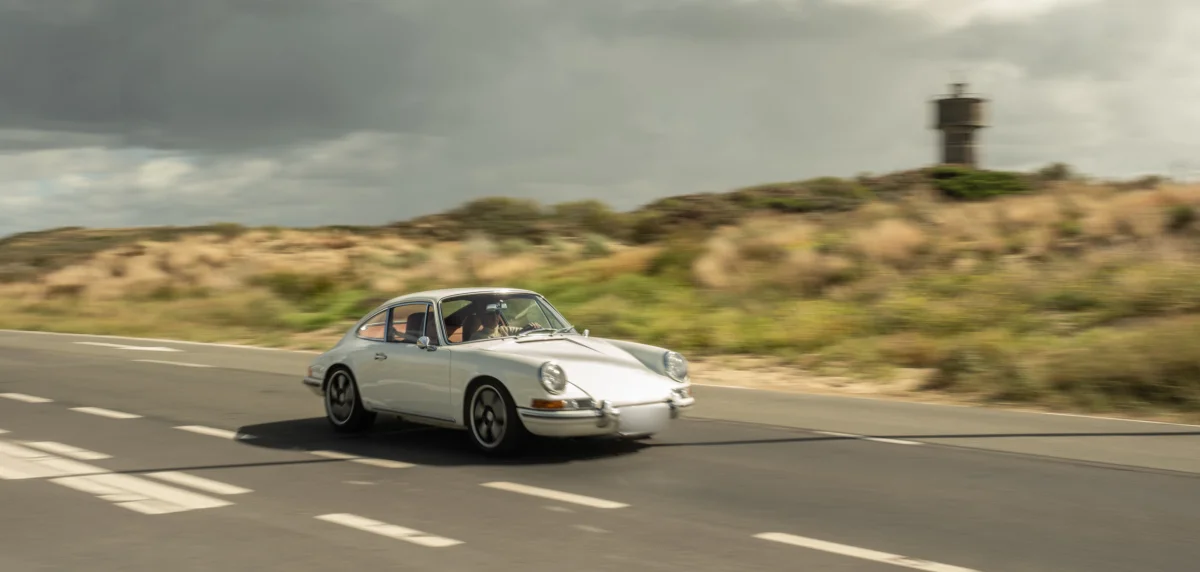
The most revealing moment in a bespoke interior is often the first time you settle behind the wheel. Before noticing the stitching, you discover where your hands fall, how clearly you can read the instruments and whether the seat supports a comfortable driving position. These everyday relationships deserve as much attention as the colour of the leather.
For a classic undergoing electric conversion, the cabin presents a particular design challenge: accommodate a different driving system without losing the visual coherence of the original interior. A useful brief therefore starts with habits, not finishes. How you drive, what you carry and which details you value provide a more dependable foundation than a collection of attractive material samples alone.
Start with the driving position, not the upholstery
A seat can look beautifully proportioned and still leave its driver reaching for the wheel. Before discussing stitching patterns, consider the relationship between seat, pedals, steering wheel and instruments. These elements form a connected arrangement, rather than a series of independent choices.
Think about who will use the car and for how long. A cabin shared by drivers of different heights calls for a different discussion from one shaped around a single owner. Longer journeys also make support, ease of movement and the location of frequently used controls particularly relevant.
Where practical, assess the position in the actual donor vehicle before committing to the interior specification. Photographs rarely reveal whether a steering wheel obscures a dial or a seat bolster complicates entry. Any proposed changes to seats, mountings or restraints need specialist assessment, not simply an aesthetic decision.
Give electric information a clear visual hierarchy
An electric conversion changes the information a driver needs from the dashboard. Battery charge and charging status become relevant, while some combustion-related readings no longer describe the installed drivetrain. The design task is to organise that information without turning a restrained classic dashboard into a crowded display.
Begin by separating what must be easy to see while driving from what can be consulted when stationary. Consider the legibility of labels, contrast between pointers and dial faces, and visibility in changing light. A familiar-looking instrument is only useful if its meaning remains clear.
Revolt Classics describes analogue-inspired dials and Bluetooth connectivity among its interior features. That combination offers a starting point for discussing presentation, rather than prescribing one dashboard layout. The precise instruments, warnings and controls must be determined for the individual conversion and reviewed by the relevant specialists.
Choose materials for touch, light and wear
A small leather sample tells only part of the story. Its colour may appear different across a broad seat cushion, beside painted metal or under daylight through the windscreen. Review materials together, ideally in the intended setting, rather than approving each finish in isolation.
Allocate finishes according to how each surface will be used. A steering-wheel rim, seat edge and decorative door insert have different contact patterns. Ask how a proposed material should be cleaned, what ageing to expect and whether matching material could be obtained for a future repair.
Reflectivity deserves its own consideration, particularly on surfaces close to the windscreen. Glossy trim can look appealing on a sample board yet introduce distracting reflections in the cabin. Stitching contrast, piping and perforation should likewise support the interior's composition instead of making every panel compete for attention.
Make space for the objects that travel with you
A convincing interior accommodates ordinary belongings without looking as though storage was added at the end. Glasses, a phone, keys and a light jacket can reveal gaps in an otherwise detailed brief. List the things you actually take on a drive, rather than designing around an imagined touring lifestyle.
Phone connectivity and phone storage are separate questions. Even where wireless communication is available, the device still needs a suitable place, and any charging lead needs a considered route. Check that everyday objects do not obstruct controls or occupy space needed by the driver or passenger.
Concealed compartments may preserve a simple appearance, but their access should be equally well considered. A neat lid is less useful if it is awkward to open from the seat. Discuss storage alongside trim construction and access for maintenance, before the visible surfaces are finalised.
Turn preferences into a brief that can be checked
An effective brief distinguishes an essential requirement from a visual preference. Clear instrument visibility might be essential; a particular thread colour might remain open until the full palette is assembled. Making that distinction helps resolve choices when the donor vehicle's proportions impose limits.
Revolt Classics begins its bespoke transformation process with a conversation about style, driving experience and individuality. It works independently on customer-owned donor vehicles, with suitability assessed before transformation. Interior decisions therefore belong within the wider restoration and conversion discussion, not in a separate decorative exercise.
Record decisions in a form that can be revisited: material references, agreed control locations and clearly identified unresolved questions. Ask what can be assessed through samples or a physical mock-up, and what requires technical confirmation. A short, specific brief is more useful than a long list of adjectives.
- The regular drivers and the journeys the car is intended to make.
- The original interior details you want to retain or reinterpret.
- The belongings, connectivity and storage needs to accommodate.
- The choices that need a physical trial or specialist technical review.
Conclusion
A successful classic electric interior does not need to announce every change. Its quality can lie in an unobstructed dial, a comfortable reach to a switch or materials that feel right together. Those results begin with careful questions about use, followed by decisions made in relation to the actual car.
Colour and craftsmanship remain central to the pleasure of a bespoke cabin. They become more convincing when supported by a clear layout and a practical brief, allowing the interior to feel personal without sacrificing its coherence.